Bosnia Journey 2026 — Day 8
Bismillahir-Rahmanir-Rahim
I woke for the Fajr prayer at a quarter past four, and at that hour a strange feeling came over me, one in which energy was mixed with tiredness, and wakefulness with a longing for rest. Once I had prayed I could find no way back to sleep, and I did not wish to force my soul towards something it refused. So I sat at my desk instead, reviewing some work and turning my attention to the letters and notes that had gathered over the days of the journey. The hours passed in a quiet stillness, broken only by a faint sound from somewhere in the distance, or the occasional movement in the hotel corridors.
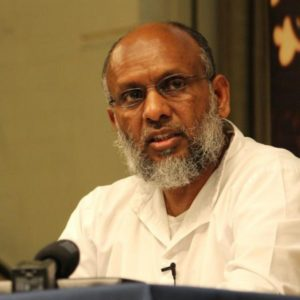
As seven o'clock drew near, I went down to take my leave of my companion Dr Omar Khan, who had come from California. Over these few days we had been drawn together by good companionship and by continuous conversation about knowledge, da'wah, and the condition of Muslims in the East and the West. How many thoughts a farewell stirs in the soul. A person cannot part from a companion whose company he has enjoyed without feeling a kind of emptiness within, as though a part of his own days were leaving with that traveller.
When Ignorance Becomes Doctrine
While I was caught up in this conversation with myself, my thoughts turned to a matter that has occupied me for a long time, namely the way ideas settle in people's minds and become, over time, established beliefs that no one thinks to question. I reflected on how many statements first arise from an assumption, an error, or a misunderstanding, and are then passed from tongue to tongue across the generations until they stand as though they were fixed truths. An old saying has often come back to me here: that the basis of most writings is ignorance, which then passes to the second generation as narration, and which the third generation inherits as doctrine. Once ignorance has hardened into doctrine, putting it right becomes one of the most difficult and demanding of tasks. People can bear to be told that they were mistaken in an opinion, but they cannot bear to be told that what they have inherited as belief is in need of review or correction.
This is not peculiar to one nation or another, nor to one group or another. It is simply the condition of the human being wherever he happens to be, for many of the illusions that govern the lives of peoples first arose from an old ignorance and then, with the passing of time, put on the robe of sanctity. This is why the work of intellectual reform is among the heaviest and most demanding of undertakings. It does not face error alone, but also the pull of familiarity, of habit, and of the inherited attitudes to which both groups and individuals cling.
Then I went to the restaurant, where I met my family and daughters at the breakfast table. There was something in that morning gathering of a quiet joy that comes just before a parting. The faces were smiling and the conversation was gentle, yet deep within everyone there was an unspoken awareness that the days of the journey were coming to an end, and that each of us would soon return to our usual lives and daily work.
After that I went back to the room, gathered up my books and papers, packed my bags, and took a last look at the place where I had stayed for these few days. I do not quite know why a person grows attached to places, even when his time in them has been short, and then finds in leaving them a kind of gentle sadness. Perhaps the secret is that a place holds on to something of the memories lived within it, so that when we leave, we leave a part of those memories behind.
The Journey Home
After half past seven I went down, ready to set off for the airport. At around eight o'clock we boarded the bus that was carrying about fifty-five of the journey's companions. It set off quietly towards the nearby airport, for the hotel where we had stayed was only a few minutes away. The roads still held the quiet of the morning, as though the city had not yet fully woken.
At the airport the wait proved longer than we had expected. The procedures took a good while, as is usual in the airports of this age, with their ever increasing restrictions and multiplying checks. Once I had finished everything connected with the travel, I returned to some of my work and reading, making the best use of the time that I could.
We then boarded the plane at eleven o'clock, though it was a little late in taking off. How much a traveller learns of patience. Travel is a chain of one wait after another: waiting for the bus, then for the plane, then for the bags, and finally to arrive. If only a person made good use of these moments, he would come to see that the waiting itself is part of the journey, no less important than the movement.
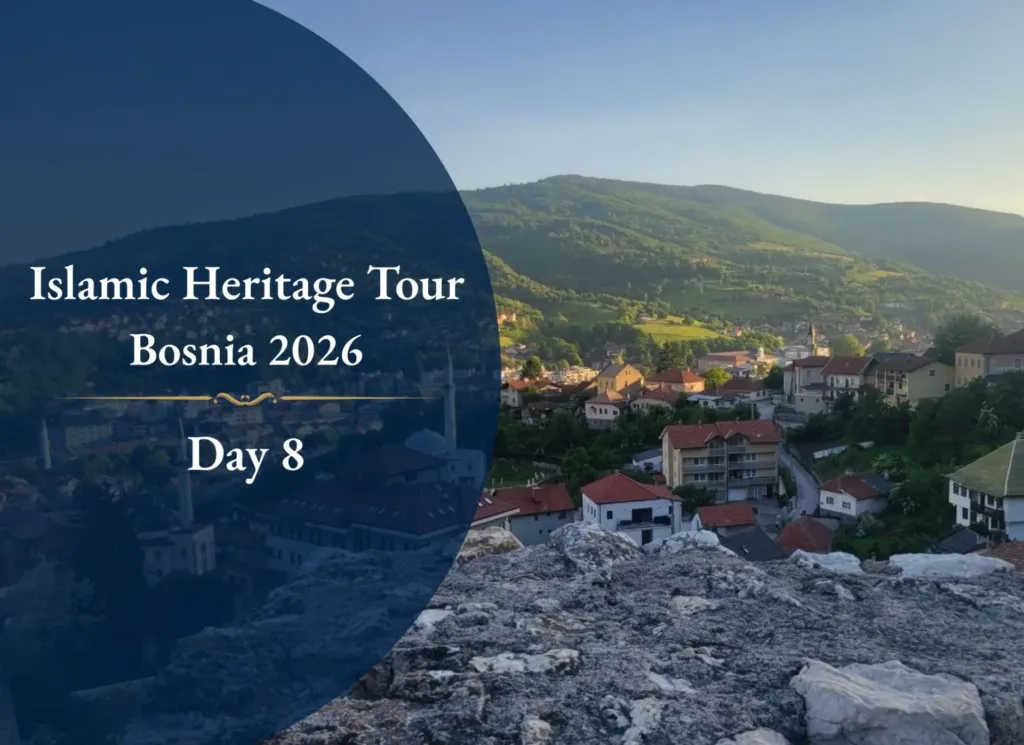
At last the plane lifted off, and Bosnia began to slip away little by little from our sight. From the window I could see the mountains, the valleys, and the small villages drawing back until they all vanished beneath the clouds. I began to call to mind the scenes of the past days: the meetings with the brothers, the gatherings of knowledge, the conversations about da'wah, the visits to the cities and the mosques, and the kind faces that had honoured us and shown us such warmth. This journey had been short in the number of its days, yet rich in the meanings and memories it carried.
We landed at Luton Airport at half past one in the afternoon, though the return was not yet over, for the bags took a long time to arrive. We waited until past three o'clock before we were finally able to board the car heading to Oxford.
Translation note: This article was translated by AI. View the original Telegram post.