Bosnia Journey 2026 — Day 2

Bismillahir-Rahmanir-Rahim
A Morning of Tafsir
I woke for the Fajr prayer weighed down by fatigue. After praying, I let myself rest a short while, for the body had grown weary with all it had carried over the previous days and seemed to ask for an hour of stillness. Once the sun had risen a little, we went down to the hotel restaurant at half past seven. The food was plentiful and varied, yet I felt no appetite for anything elaborate, and preferred bread, honey and oil. In such simple foods there is a peace I do not always find in a lavish spread.
I returned to my room and took up my review of my book on tafsir, turning its pages in the quiet of the morning and reconsidering certain passages, until the time of the lesson arrived. My talk that day was about the story of the sacrifice. I began with the foundation of the millah of Ibrahim, namely right guidance (al-rushd): that intellect guided by fitrah and made upright by its light. I then explained His saying, exalted be He: "We had certainly given Ibrahim his right guidance before, and We were of him well-aware," clarifying that the opposite of right guidance is foolishness (al-safah), as He, exalted be He, said: "And who would be averse to the millah of Ibrahim except one who makes a fool of himself."
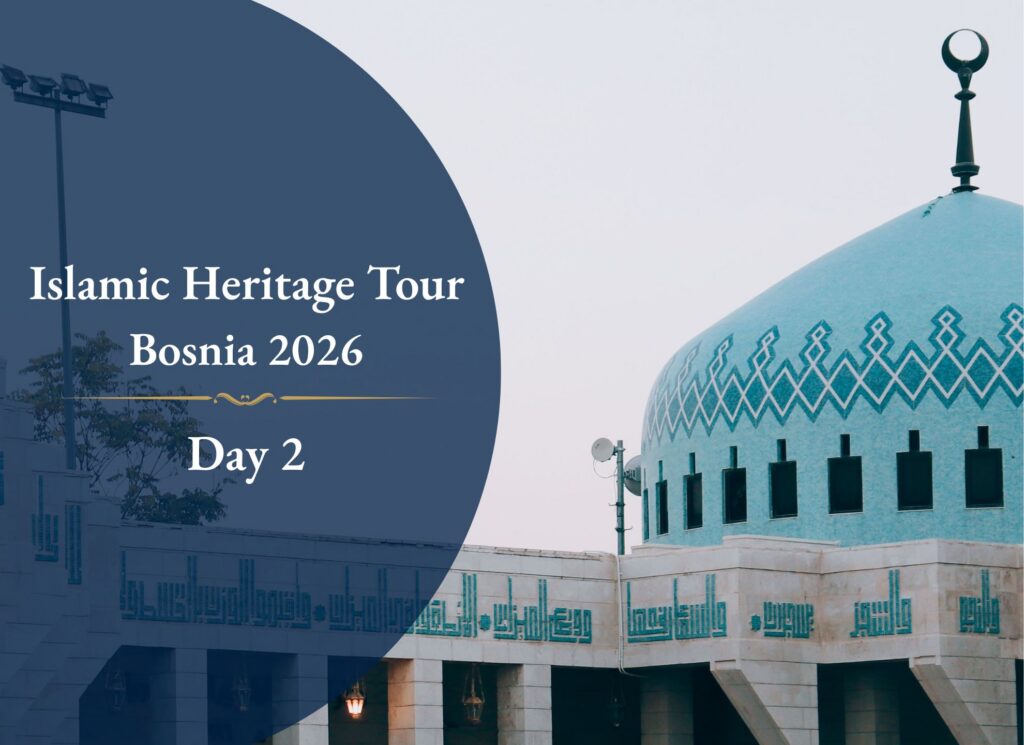
I went on to disclose for the students the hidden and subtle parallels between the story of the sacrifice and the story of the vow of the wife of Imran. Both rest on the meaning of pure giving and surrender to Allah, but the first unfolds in the world of men and the second in the world of women. I left them to exercise their own minds in drawing out the parallels, hoping they would reach the meaning through investigation rather than through dictation. We then split into two groups. One went out to tour the city of Sarajevo from morning until noon, contemplating its landmarks and historical traces, while the other stayed in the Jordanian mosque to practise the art of gilding, that ancient Islamic art which adorns mushafs and manuscripts with gold and with botanical and geometric ornament. The mosque was spacious and well organised, and its upper floor had been set aside for the gilding workshop, where they sat together in quiet.
Into the Heart of Sarajevo
After the lesson, we went down to the heart of the old city and then crossed the famous Latin Bridge, a modest bridge whose history bears no relation to its size. From it rang the shot that killed Archduke Franz Ferdinand and his wife in 1914, an event that shook all of Europe and set the First World War in motion. The place today is calm and quiet, as though the city wished to teach its visitors that the greatest events may begin in the simplest of settings.
We continued to the Sarajevo City Hall (Vijećnica), a magnificent building that overlooks the river with evident majesty. It was built in the late nineteenth century in the Austro-Hungarian style, though touched by eastern ornament, so that Islamic arches and Andalusian colours meet there with strict European precision. The moment one enters, the painted ceilings, the stained glass windows and the broad staircases gleaming under the light hold the eye. Most poignant of all is that the building was burned during the siege of Sarajevo, when thousands of precious manuscripts and books were lost. It was restored after the war, as if the city wished to triumph over ruin through memory and beauty.
From there we made our way into the old market, Baščaršija, the Ottoman heart and enduring eastern soul of Sarajevo. Its stone-paved alleys grow narrow, and the small shops of coppersmiths and craftspeople press close against one another, breathing out the scents of Bosnian coffee, polished copper and old wood. The artisans sit before their shops shaping copper vessels as their forebears did for centuries, until a visitor might think that time has slowed in this place to give the past another chance to remain.
In the middle of the market rises the Gazi Husrev-beg Mosque, standing in quiet dignity. It is one of the most magnificent mosques of the Balkans, built in the early sixteenth century by the famous Bosnian governor Gazi Husrev-beg, its dome soaring with majesty and its tall minaret rising into the sky. The mosque too was damaged during the siege, but it was carefully restored and reopened for worship, and it still receives worshippers and visitors with the same serenity it has known for five centuries.
I performed the Zuhr prayer in this great mosque. As I sat there in the cool of the shade, with water flowing from its fountains and pigeons fluttering beneath its high dome, I felt myself in the presence of a layered history: Ottoman, Austro-Hungarian, Yugoslav and modern Bosnian. And I felt that Sarajevo, for all the wounds in its body, had remained a city that refused to break.
I came out of Baščaršija to a coffee shop facing the river, where I met two of the most senior Bosnian women professors of Islamic studies, two scholars who carry Bosnia's learned memory with great distinction. They welcomed me warmly, and we fell into a quiet conversation about the state of Islamic studies in the country, the challenges facing Muslim youth and the part women play in reviving religious thought. The conversation ran for nearly an hour and was rich in substance and meaning. I would gladly have let it run longer, but time pressed on me, and I had to continue my tour.
I returned to the hotel at half past five in the afternoon, after a long day that had begun before dawn. I sat in my room to rest a little, but my mind kept turning over what I had seen and heard, so I took up my pen and began to write down my impressions of the day. Evening arrived with the Maghrib prayer, after which I went down to the hotel restaurant for dinner with a group of my students. We talked over the day's events and all that we had seen of the city's landmarks, and we agreed that Sarajevo was not merely a city we were passing through, but one that had left a deep impression on the soul.
After dinner, I gave a public lecture in the conference room on the theme "The Role of Scholars in Reviving the Ummah in Times of Crisis." The lecture lasted about an hour and a half, and the questions then continued for a further half hour, which I answered with as much patience and detail as I could. In the questions, and in the faces before me, I sensed a real hunger for knowledge and a genuine desire to understand the religion of Allah correctly, far from the conflicts and divisions that have torn the Muslim world apart.
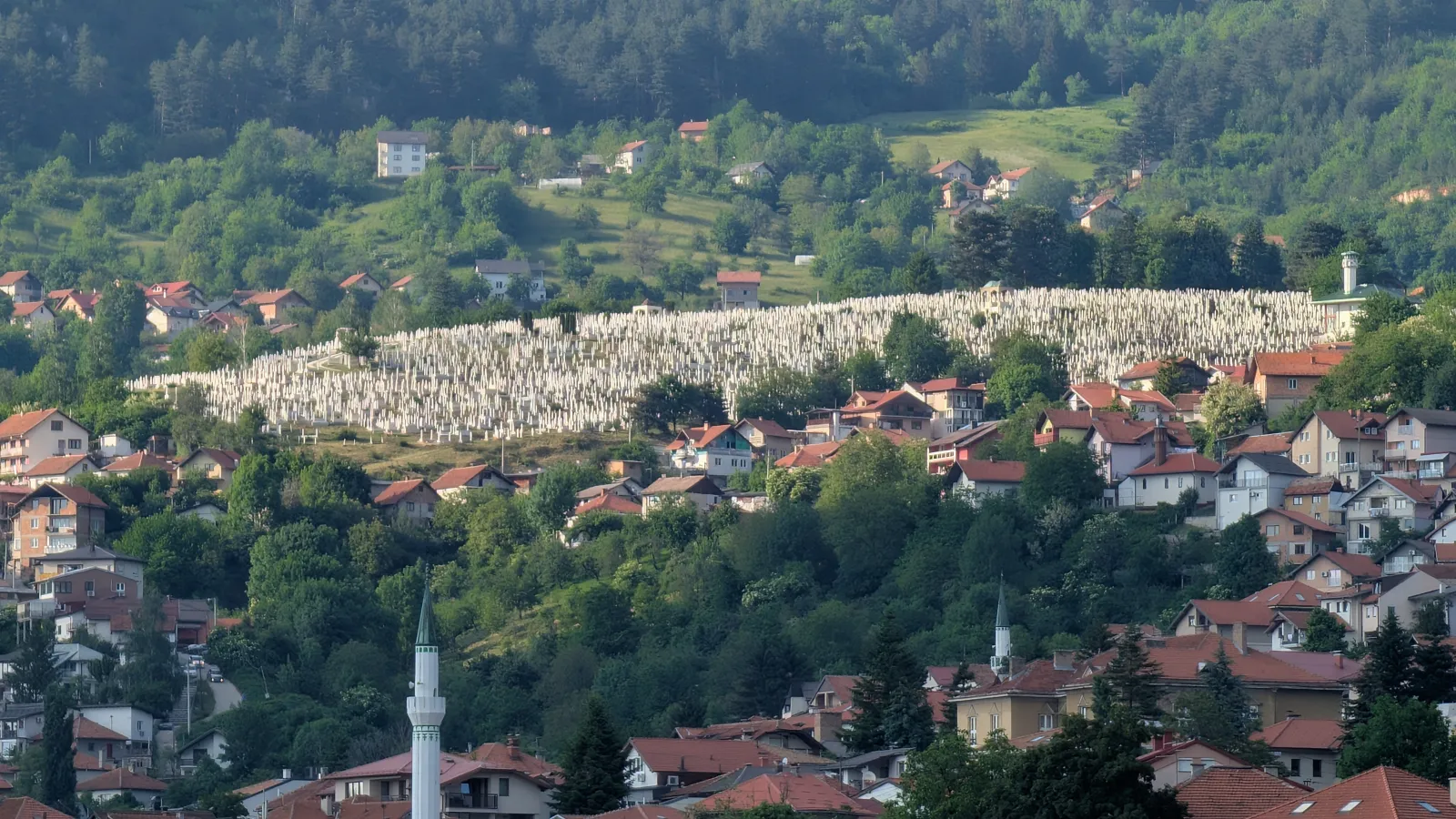
The lecture ended at half past nine at night. I went up to my room, and Sarajevo lay before me from the balcony, its lights scattered along the mountains in the darkness and the river tracing its slow course through the shadowed valley. I stood contemplating the city for a while, then whispered a prayer of gratitude to Allah for the day I had spent, and for its lessons, its meetings, its conversations and the impressions I had gathered. Then I went to sleep, worn out, hoping that the next day would bring more lessons, more knowledge and more blessing.
Sarajevo is a city of a curious nature. It carries the spirit of the East and the face of the West, and holds as much sorrow as hope. It is a city that emerged from war laden with wounds, yet it still keeps a human tranquillity that quickly endears it to the visitor and makes it impossible to forget.
Translation note: This article was translated by AI. View the original Telegram post.