Bosnia Journey 2026 — Day 5

Bismillahir-Rahmanir-Rahim
The Eid Prayer at Half Past Six
Sheikh Abu Talib, who had come from America, led us in the Eid prayer at half past six in the morning. There was a quality in his takbir that awoke in the soul meanings of peace and reverence, and a dignity in his presence that belongs to scholars who have combined knowledge with purity of spirit. He is one of the well-known preachers who take the hearts of their listeners before their ears, and one of the teachers of the Al-Salam Institute, who are known for their care of knowledge and their call to the path of Allah.
He delivered an eloquent khutbah in which he reminded us of the history of the building of the Holy Ka'bah. He spoke of Ibrahim ﷺ on the day he raised the foundations of the House, of that effort mingled with faith, and of a sacrifice that was not one man's alone but the sacrifice of an entire family, chosen by Allah for trial and certainty. He paused long at the story of Hagar and her patience, and at Ismail and his obedience, until it seemed to us that those distant events were not lying in the depths of history but happening now, before our eyes, with all their tears of hope, their trial of love, and their truth of submission to Allah Almighty.
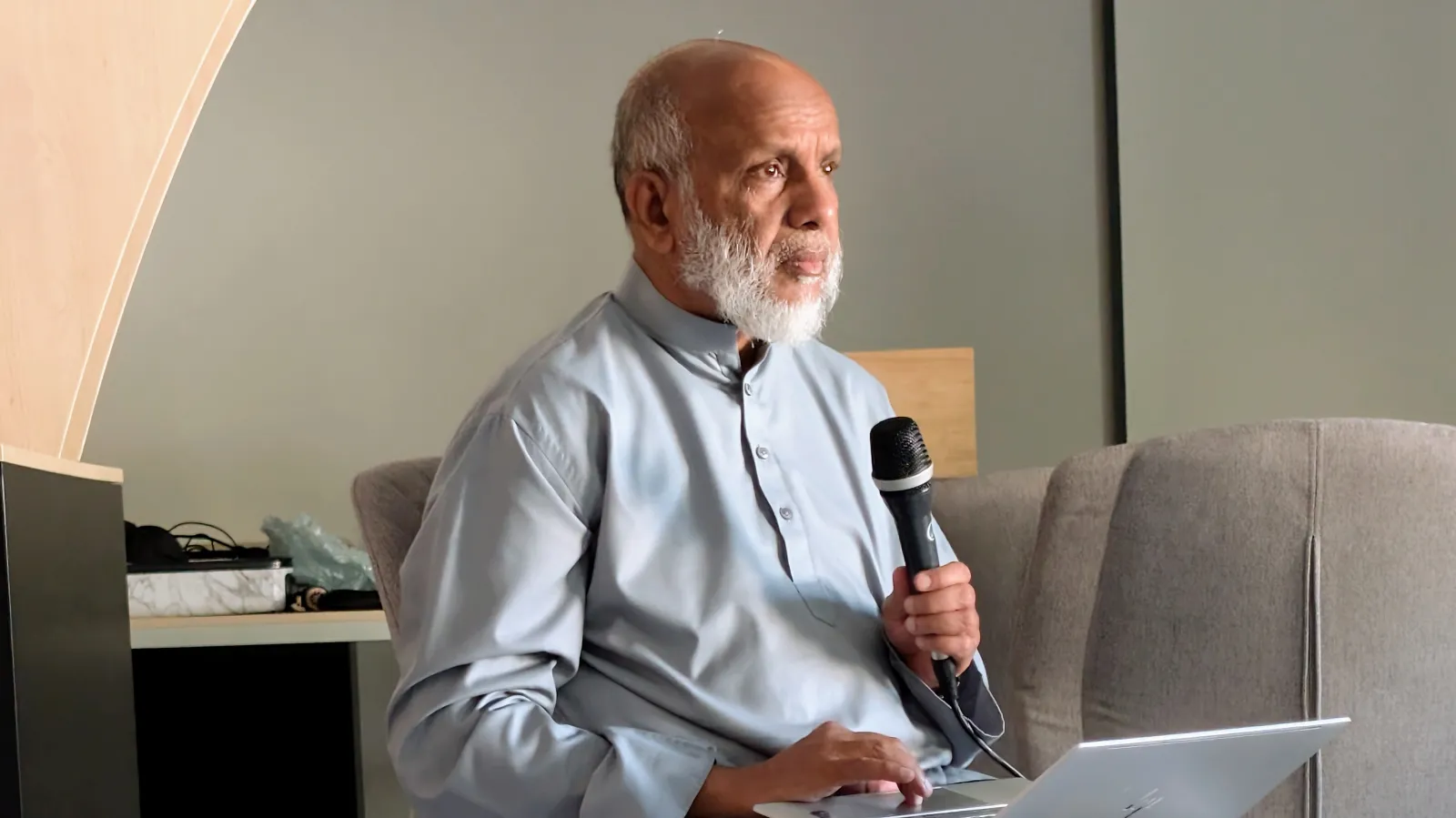
Then I offered a brief word after the prayer, in which I spoke of the meaning of the musalsal hadith and its particular place in the science of narration. Such a hadith carries in its very words and form the trace of the chain and the spirit of its reception, for it transmits not only the words but, along with them, the image of their delivery and the warmth of feeling. I gave those present the musalsal bil-awaliyyah, the hadith with which the muhaddithun used to begin their students' study. I then gave them the musalsal bil-mahabbah, for the harmony of spirits and the gathering of hearts in love for Allah, and after it the musalsal bil-yawm al-eid, which held a special joy in this gathering, since the nobility of narration met the joy of the occasion, knowledge mixed with delight, and remembrance with happiness.
When we had finished, we embraced one another and offered our congratulations on the blessed Eid of Allah. The faces overflowed with a pure gladness that held no affectation or pretence, as if the Eid had restored to the souls something of their original innocence. We then made our way to the hotel restaurant at a quarter past seven, where we took breakfast in an atmosphere of affection and contentment. Conversations about knowledge, religion, and the memories of the journey passed around the table, and the laughter of the brothers mingled with the sound of coffee cups, while the morning sun had begun to spread its quiet threads across the place, heralding a day of Eid that would not be forgotten.
The Kravica Waterfalls
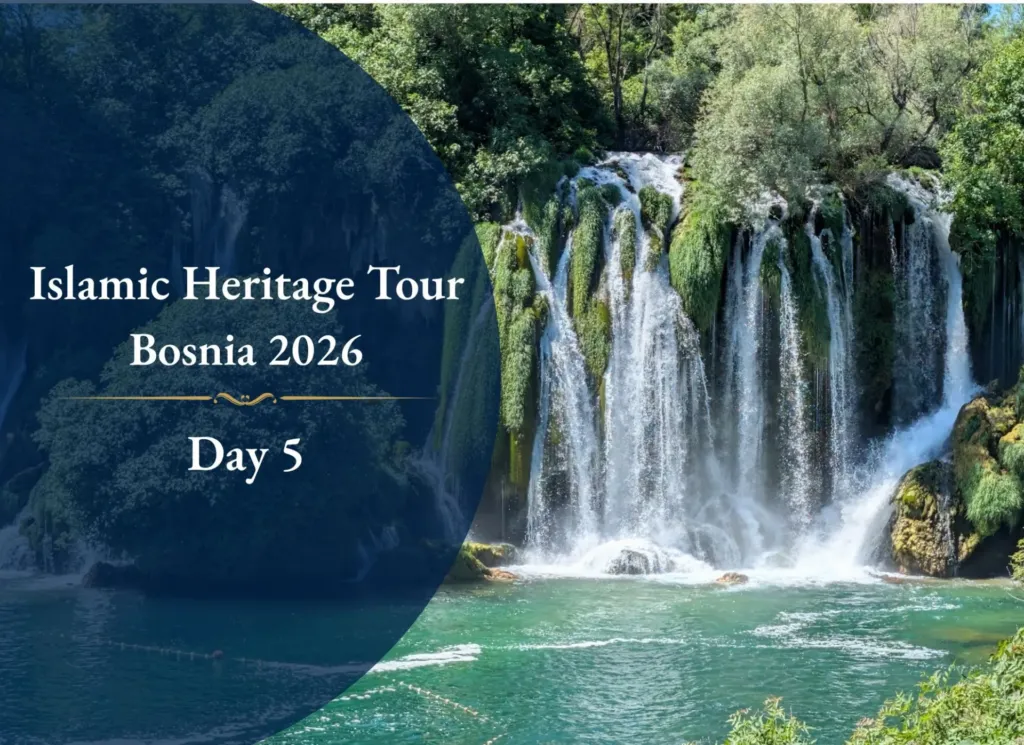
We set out at half past nine for the Kravica waterfalls, that natural jewel set in the heart of Herzegovina. There the waters of the Trebižat river flow at first quietly, then do not delay to fall from on high in a gentle violence, as if nature itself had gathered within them both stillness and revolution, both whisper and roar. As we drew near the place, we felt we had passed out of the world of people into another world, where the only authority is that of water, greenery, and clean air.
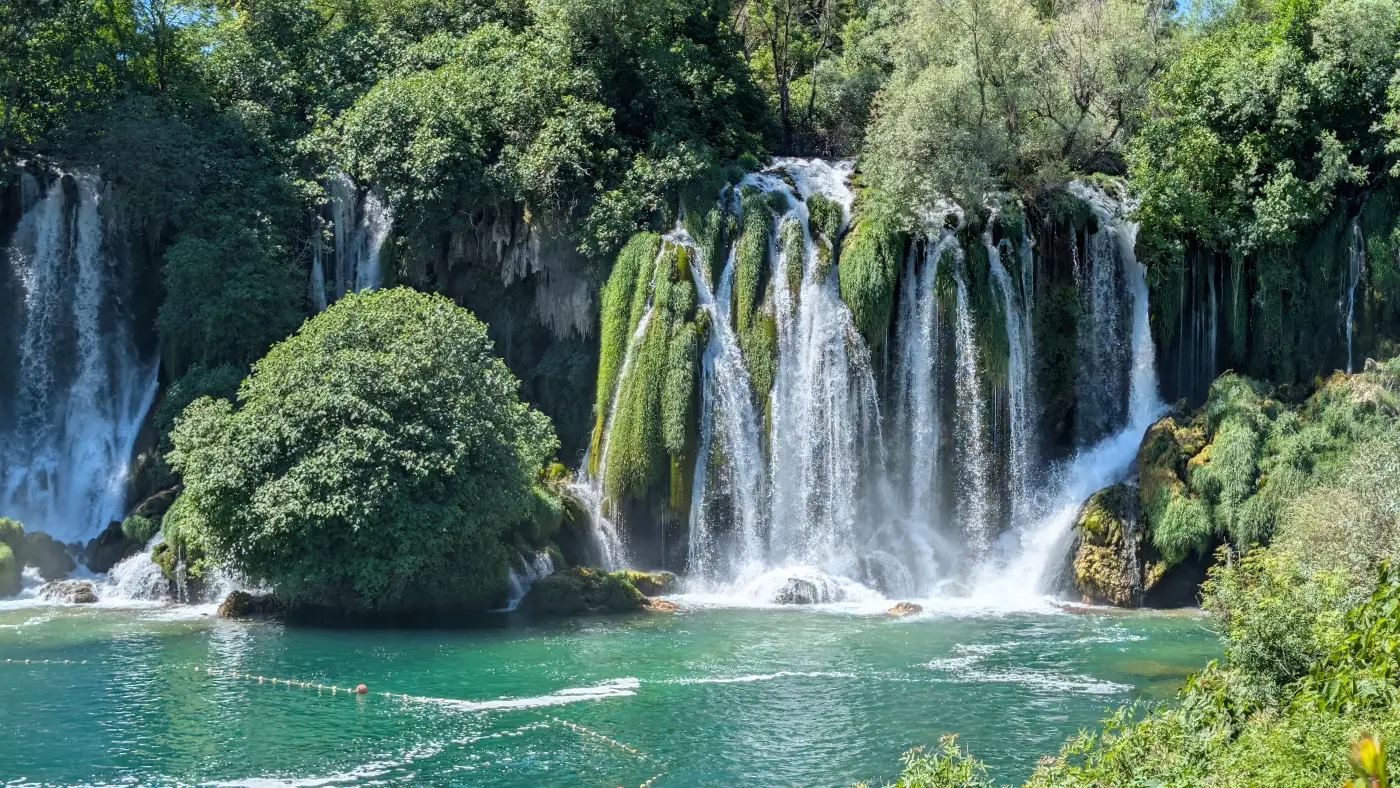
The road to the waterfalls passed between poplar and fig trees, and those wild trees that grow according to their own nature, knowing neither the gardener's hand nor the order of cities. The greenery covered the place so fully that one might think the earth had put on a green robe from which nothing of it showed. As for the limestone rocks down which the water descended, they were covered with mosses and lichens and tiny grasses, so that the waterfall itself seemed a living, breathing thing rather than silent mineral.
I saw in this place no visible trace of civilisation's contrivance, and none of the noise of construction. No tall buildings marred the view of nature, and no machine-noise spoiled the soul's serenity. Instead one saw the water flowing in its first freedom, and the trees standing in their ancient dignity, as if time had not passed over this place at all.
The height of the waterfall was about twenty-five metres, with the waters branching into twenty small drops that then gathered together in a round, quiet lake, surrounded on every side by sand and trees. Perhaps its relative smallness is what gave it this intimate closeness to people, for it is not only the colossal that arouses awe. This was a beautiful companion, inviting the visitor to come close and to sit beside it for a long while in fellowship and reflection.
I saw the people there scattered between swimming and sitting on the banks of the lake. Some spread cloths on the ground for food and conversation, while others pitched their tents not far from the water. There was a small café where the visitors sat quietly, talking in whispers as if they feared to interrupt nature's sacred silence. They told us about the boats and the rowing in summer, and about the spring, when the greenery reaches its peak and the tables fill with grilled fish and the local foods for which the people of those parts are famous, and we took some ice cream and strawberries.
They then pointed out to us a nearby cave, where stalactites and stalagmites hung in a strange beauty, along with an old mill and a small ship moored at the river's edge, like a trace of a distant age that had refused to pass. The place needed no great decoration; the beauty in it was purely natural, with no contrivance and no pretence.
Translation note: This article was translated by AI. View the original Telegram post.