Eating Less: An Agreed-Upon Sunnah

One of the strange tragedies of our religious life is that we continue to debate and argue with extraordinary enthusiasm over issues on which the imams and jurists have differed for centuries, while giving very little attention to matters whose basis and virtue are not subject to any significant disagreement among scholars.
Whether it is raising the hands during prayer (rafʿ al-yadayn) or not raising them, saying “Amin” aloud or quietly, the question of reciting behind the imam, certain juristic rulings concerning the beard, or the question of eating while seated at a table—each of these matters has its own juristic evidence and scholarly background. Many of them have been the subject of disagreement among the imams and scholars since early times. Acting according to one’s position and presenting its evidence is one thing; the problem arises when a subsidiary matter over which there is legitimate disagreement comes to dominate our ethics, brotherhood, and mutual respect.
At times, a minor juristic disagreement becomes so heated that words are uttered which cause another Muslim pain. Sometimes matters progress to accusation, suspicion, backbiting, criticism, abuse, and contempt. Thus, while defending an issue over which respected scholars of the Muslim community themselves have differed, we end up committing sins concerning which there is no disagreement at all regarding their prohibition. This raises a serious question about our religious priorities.
We spend hours discussing matters on which the jurists have differed, yet give little thought to the clear teachings upon which the Shariah has repeatedly placed emphasis. Among these is eating less and maintaining moderation in food.
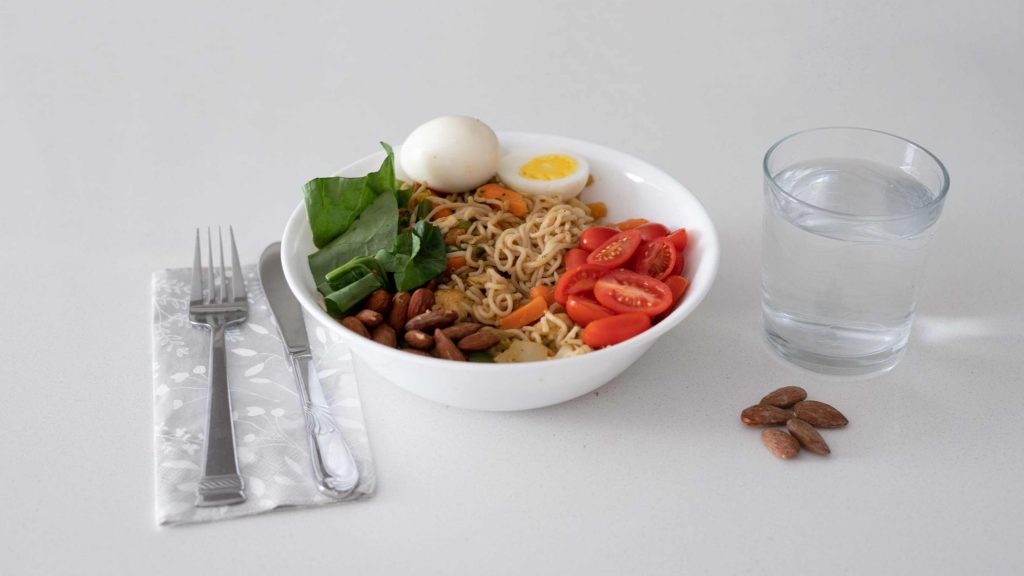
The Messenger of Allah ﷺ taught moderation in eating and avoidance of overeating. In the well-known hadith, the human stomach is described as the worst vessel to fill, and guidance is given that a few morsels are sufficient for a person to maintain his strength; and if he must eat more, then one-third of the stomach should be for food, one-third for water, and one-third for breathing. This is not merely medical advice; it is also training in self-restraint, contentment, vitality in worship, and control over worldly pleasures.
This teaching of eating little and maintaining moderation in food is prominent throughout the entire tradition of Islamic asceticism. In the lives of the Prophets, the Companions, the pious predecessors, and people of ascetic devotion, simplicity, contentment, and avoidance of excess in food have consistently been given importance. Regarding the virtue of eating less, there is broad agreement in the scholarly heritage of the Muslim community. By contrast, many of our debates concern matters over which the imams themselves have differed.
Here we need to examine our religious temperament. We are sometimes extremely active in determining where the hands should be raised during prayer, whether Amin should be said aloud, whether one should recite behind the imam, or which method is more correct in some outward juristic detail. Yet we give less thought to whether the food placed before us is actually a necessity or merely a desire.
We are eager to reform the practices of others, but postpone reforming our own selves, our tongues, and our desires. Yet controlling one’s own self is a continuous religious responsibility.
This matter is especially important for scholars and religious leaders. The dignity of a scholar does not come merely from the breadth of his knowledge, his memory of books, or his ability to debate; its true beauty is manifested in his life. A person who calls others to asceticism should display contentment in his own life; one who teaches detachment from worldly things should show simplicity in his habits; and one who claims to love the Sunnah should also strive to follow those aspects of the Sunnah that are difficult for the self.
Our scholarly tradition also contains shining examples whose lives combined intellectual greatness with simplicity and moderation. If we look at photographs of Allamah Shibli Nomani, Sayyid Sulayman Nadwi, Mawlana Hamid al-Din Farahi, and Mawlana Sayyid Abul Hasan Ali Nadwi, may Allah have mercy on them all, we can also perceive a general sense of moderation and simplicity in their physical appearance. This is neither a measure of anyone’s piety or scholarly rank, nor is it intended to make physical build a criterion of virtue. Nevertheless, the observation does draw our attention to the fact that ostentation, indulgence, and preoccupation with food were generally not prominent values in the lives of our predecessors. Their primary concern was knowledge, thought, worship, preaching, writing, and the reform of the Muslim community—not an abundance of eating and drinking.
It is also important here to clarify that it is not correct to judge a scholar or any other person’s piety or scholarly standing by their physical features, weight, or illness. Human bodies differ from one person to another, and illnesses have many causes; one’s inner state cannot be judged from outward appearance. Nevertheless, making excessive eating, extravagance, and indulgence in food a habitual way of life is an attitude about which every Muslim, particularly scholars, should take account of himself.
The state of our invitations and banquets also deserves reflection. Hospitality is certainly a beautiful Islamic virtue, and accepting someone’s invitation can be a means of expressing love and strengthening relationships. But the purpose of an invitation is not for a person to eat several times more than he needs. Today, sometimes so many varieties of food are placed on the table that a person begins to follow variety and desire rather than necessity. The host thinks that offering more food demonstrates greater honour, while the guest thinks that it is necessary to taste everything. The result is that a person continues feeding his desires rather than his body’s actual needs.
Islam does not teach us to deprive ourselves of blessings; it teaches us to avoid extravagance in blessings and to maintain a responsible relationship with them. Eating lawful provision is not prohibited, but even in lawful things moderation is required. The real question is not how many dishes are present on the table, but how much a person eats from them and why he eats it.
For this reason, while understanding the Sunnah of eating less, it is also important not to turn it into such a rigid and uniform rule that it is declared equally obligatory upon every person. Every person’s age, health, physical exertion, climate, and needs are different. To claim that every scholar or every Muslim is religiously obliged to eat only once a day, or that one should refuse every invitation, would be a separate juristic claim requiring independent evidence. What is fundamentally required is that a person fulfil his legitimate needs without overeating, extravagance, or exceeding those needs merely for the sake of pleasure.
Perhaps the real question is how much struggle we have undertaken against our own selves. We have held how many debates, engaged in how many arguments, and persuaded how many people of our position—all of this has its place. But how many times have we remained silent despite being angry? How many times have we preserved the dignity of a Muslim who disagrees with us? How many times have we restrained our tongues from backbiting? How many times have we placed our desires behind our actual needs at the dining table? And how many times have we acknowledged that, in a matter over which respected scholars of the Muslim community have differed, another Muslim may also have room to follow a valid scholarly opinion? These questions may prove more beneficial to us than many of our debates.
Juristic disagreement is part of the Islamic scholarly tradition. Eliminating differences of opinion is neither possible nor desirable. The Companions, the Followers, and the great jurists also differed over numerous matters, yet their disagreements did not strip their hearts of brotherhood. We too must learn that we can disagree over an issue without belittling a Muslim. We may consider a particular practice contrary to the Sunnah according to our understanding, but we cannot therefore regard as inferior everyone who follows another valid scholarly position.
Before counting the morsels of others, we should count our own. Before discussing other people’s manner of prayer, we should examine the state of our own hearts. Before compiling lists of other people’s juristic mistakes, we should look at the list of sins committed by our own tongues. And before raising our voices over every disputed matter, we should remember that violating the dignity of a Muslim is no trivial matter.
Eating less may appear to be a very ordinary thing. There is no debate in it, no slogan, and no opportunity to display one’s intellectual superiority. Perhaps that is why it escapes our attention. Yet the reality is that eating less is a quiet struggle against one’s own self. At the dining table, there is no opponent before a person, no audience, and no debate; there is only the person and his desire. Stopping oneself before taking one more morsel can sometimes become a more effective form of spiritual training than a lengthy speech.
Religion is not merely that we know the correct ruling; it is also that, having learned what is right, we live according to it with the right character. If our tongues speak about the issues of the Sunnah while our character is devoid of the spirit of the Sunnah; if we devote our energy to subsidiary disagreements while neglecting contentment, self-restraint, good character, and moderation in eating, then we should reconsider our priorities.