Reflections on Friendship and Learning at Nadwa
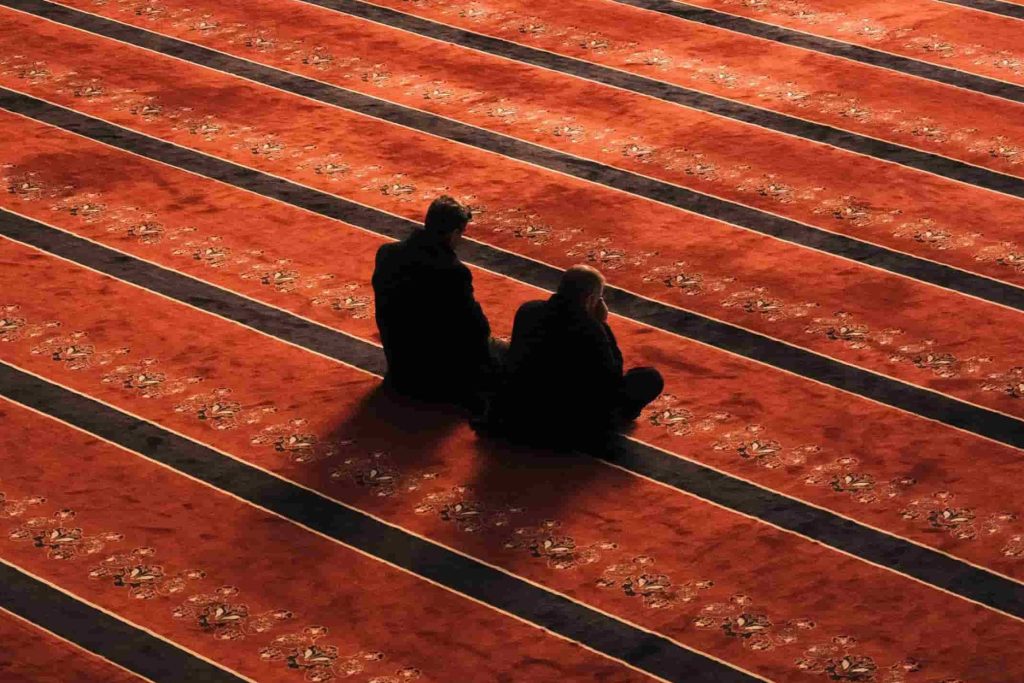
At times I find myself upon the playing-field. Our earnestness with regard to games was itself a matter worthy of record. Any sport in which we happened to emerge victorious we declared to be the finest instrument for mental and physical training; yet the moment we were defeated the rules, the weather, the ground, the ball, the umpire—indeed, at times the whole cosmos—fell under suspicion. At Nadwa even play was an education, loss was an education, and, of all lessons, to justify one’s own defeat before one’s companions was perhaps the most exalted form of education.
Then there are those corridors through which I still pass to this day. To walk in them was never merely to move from one place to another. Should one meet a friend, five minutes would readily become half an hour; should a teacher appear, a sudden gravity would settle upon one’s gait, a gravity that did not always accompany the opening of a book. The corridors of Nadwa did not teach us how to walk only; they taught us that many of the great decisions of life are taken while a man is simply walking, and that later, by labelling them “well-considered decisions,” he preserves the dignity of his intellect.
And then there is the Gomtī. As one walked along her bank the world of Nadwa assumed an altogether different hue. The river flowed at its own pace, and we at the pace of our conversation—now poetry and literature, now a certain book, now a particular ʿālim, now some scholastic question; and at times a discourse the nature of which I have not, to this day, been able to decide—was it scholarly, literary, or merely a most tasteful manner of passing time? In those days we were certain that we were grappling with momentous intellectual questions; age has since informed us that on many an occasion we were only trying to determine whether a certain person was truly as great a scholar as we imagined him to be.
Yet amidst all this there was one truly great reality: friendship. Sitting with friends, speaking without ceremony, quarrelling over a verse of poetry, waxing excessive in the praise of a book, forming a judgement about a personality and, the following week, altering it altogether—this was the very stuff of life at Nadwa. At that time we had no appreciation of the worth of our companionships. Perhaps the greatest naïveté of youth is its ignorance of the fact that the moments it passes over as ordinary later become the entire capital of one’s life.
The majlis of Mawlānā Abū’l-Ḥasan ʿAlī Nadwī, may Allāh have mercy upon him, continues within me in that same unbroken state. To sit before him was not merely to be in the presence of a venerable elder. In his speech there was a warmth that unlocked some silent chamber within one’s soul. Even now, whenever his voice returns to memory, I feel myself seated once more in that gathering. Ah, Mawlānā Shahbāz! The conversation travels from a subtle academic point to a personality, a book, a verse of poetry, or an historical incident, and I am listening with full attention—or, at least in my recollection now, I am listening with full attention. Memory is most generous with a man; it deletes the weaknesses of the past and returns him to himself a somewhat better human being.
I recall the company of Mawlānā Rābiʿ Ḥasanī Nadwī, the moments spent with Mawlānā Wāḍiḥ Rashīd Nadwī, and my visits to Mawlānā Saʿīd al-Raḥmān in the offices of al-Baʿth al-Islāmī. The strangest thing about those meetings is that at the time we did not regard them as “meetings” at all. They were simply life itself. Just as a man is unaware of his breathing while he breathes, so too certain companionships seem ordinary at the time; it is only later that one realises they were life’s most precious treasure.
Now, seated in Oxford, when I look upon those days, I perceive that Nadwa is not preserved in my memory as some museum in which antiquities are locked beneath glass with dates inscribed beneath them. Rather, Nadwa is a living city within me. Its corridors remain populated, the library is still open, someone continues to set down tea in the canteen, players are on the field, the Gomtī is still flowing, friends are still disputing some topic, and I, too, am present somewhere amongst them.
Both in joy and in sorrow; smiling, silent; awake, asleep.
Some have grown distant with time, some have departed from this world altogether, yet memory does not turn them into inhabitants of a graveyard; it grants them another life within itself. At times a voice is heard, a word recalled, the fragrance of a book perceived, the bank of a river glimpsed, and suddenly the distances of years collapse. A man becomes once again what he once was—or perhaps what he once hoped to be.
For this reason, whenever I recollect the Nadwa days, I find the entire army of Arabic and Persian tenses helpless. The māḍī muṭlaq says: “It has finished.” I say: No. The māḍī baʿīd says: “It is far away.” I say: No, it is so near that, were I to stretch out my hand, I could touch it. The māḍī istimrārī says: “It used to happen continuously.” I say: Sir, why are you entangled even here? Why do you say “used to”? It is happening still.
The Persian mē āyad still comes within me; the Arabic kāna yafʿalu is still at work in my memory; yet for Nadwa neither mē āyad suffices nor kāna yafʿalu.
Nadwa did not “used to come”; Nadwa comes. I was not there; I am there. Even today I am seated in the classroom, standing amidst the books in the library, sitting with friends in the canteen, returning from the field, walking through Nadwa’s corridors, stepping along the bank of the Gomtī, hearing the voice of Mawlānā Abū’l-Ḥasan ʿAlī Nadwī in some gathering, passing through the windows of the company of Mawlānā Rābiʿ, Mawlānā Wāḍiʿ and Mawlānā Saʿīd al-Raḥmān.
The only difference is that at that time I did not know I was storing up memories; I thought I was merely living. Only now have I learnt that life, on occasion, silently passes its best wealth through us.
For me, therefore, Nadwa is no closed chapter, no bygone age, no “was.” Nadwa is a continuing sentence. And its tense? Let the grammarians dispute as they will; in my own grammar it has but a single designation: the present continuous. For Nadwa is not passing; Nadwa is still flowing within me.