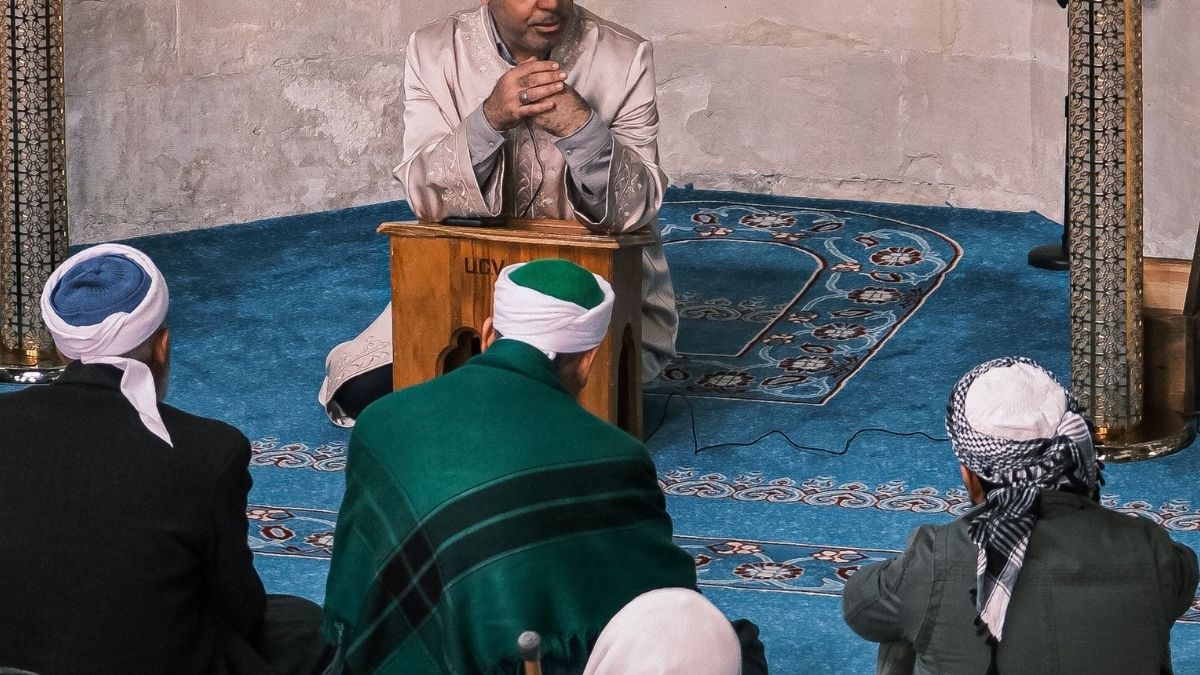
The fact is that the `ulama’ are not a respected group in society. The respect that they are given is primarily sentimental because of the emotional attachment that all people have to their religious and cultural background. That background in all societies without exception, until the last century, is that religion legitimizes (that is, sustains… Continue reading The role of `ulama’
How to engage with what is happening in our time

I generally avoid commenting on political issues, because in my experience doing so only serves to complicate and multiply the weaknesses of my fellow Muslims. I prefer to focus on matters which can waken people to a strong realization that they have a common purpose and responsibility, namely to prepare themselves for their personal meeting… Continue reading How to engage with what is happening in our time
Orientalists and Hadith

Western criticism of religious texts Modern Western critical inquiry into texts carrying religious authority have been carried out on the assumption that those texts are of natural (this-worldly) origin and therefore any claims of supernatural origin are simply mechanisms by which the religious authority of those texts are established and sustained. This is supported by… Continue reading Orientalists and Hadith
Islamophobia

Any phobia has two directions from which it arises. One direction is from the person himself who is suffering the phobia, some cause in him, psychological or cultural. The other direction is from that which the phobia is about. In this case, Muslims should realise and admit to themselves that they are hated not necessarily… Continue reading Islamophobia
A few thoughts on Surat al-`Ankabut
The surah begins with the question: “a hasiba n-nasu ‘an…” It is not right to translate hasiba as ‘think’/‘imagine’ or ‘suppose’/‘conjecture’. The meaning here is ‘reckon’, ‘calculate’, to use reason to weigh up options in order to come to a judgment about the value of this or that option. The opening verses makes it clear… Continue reading A few thoughts on Surat al-`Ankabut
Protest justly for justice

The Indian government has recently passed a law which offers citizenship to refugees and migrants from Afghanistan, Bangladesh and Pakistan provided that they are not Muslims. Muslims are explicitly excluded by name, which is unprecedented in its disdain for human rights conventions regarding the treatment of refugees and migrants. The government is also proposing a… Continue reading Protest justly for justice
Al `Imran 121-130

The Qur’an is not revealed to human minds and hearts cut off from their pasts. It is not revealed to blank minds, but to minds already shaped and constrained by their culture, inherited from their ancestors, and by present, ongoing relationships and commitments. For example, an Arab may have lent money from which he expects… Continue reading Al `Imran 121-130
Balaghah

Balaghah is generally understood to be the art of managing speech or writing so that it is persuasive. If the speaker or writer consciously chooses and arranges words so as to produce in the listener or reader the meaning and impact in their own mind of the thoughts they want to convey, then speaker or… Continue reading Balaghah
The Virtue of Sūrah al-Kahf
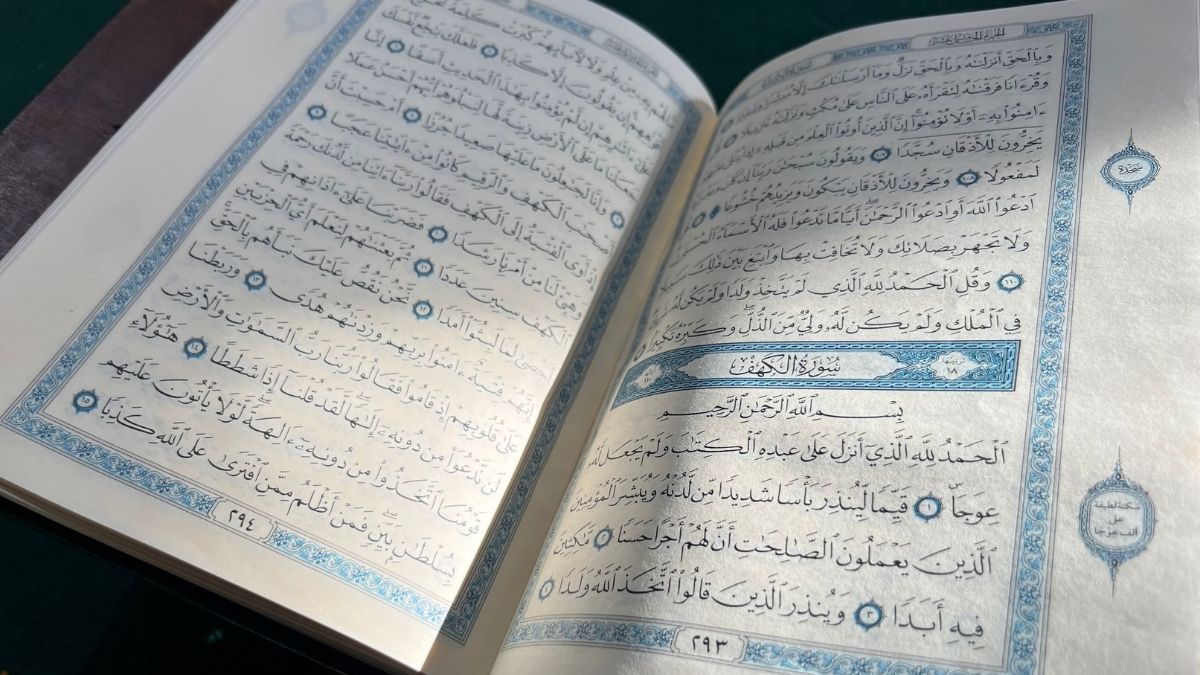
By this link: What is the degree of authenticity of the Prophetic narrations found regarding the virtues of chapters (sūrahs) of the Noble Qur’ān? I said: The authenticated (ṣahīh) of them are very few, and of the most well known established ṣahīh is what reliable narrators have transmitted about the virtues of sūrah al-fātiḥah, al-baqarah, al-‘Imrān, al-ikhlāṣ and al-mu‘awwidhatān (sūrah al-falaq and al-nās). Ibn Taymiyyah, may… Continue reading The Virtue of Sūrah al-Kahf
How do I study and what do I learn?

I was trained as an ‘alim in Nadwatul Ulama, Lucknow India. I also did a doctorate in the University of Lucknow where I recently gave a lecture on how Muslim women should go about recovering their public authority as Islamic scholars. In short, what I study is focused on the traditional Islamic sciences of tafsir… Continue reading How do I study and what do I learn?