Beyond Desire: The True Purpose of Marriage

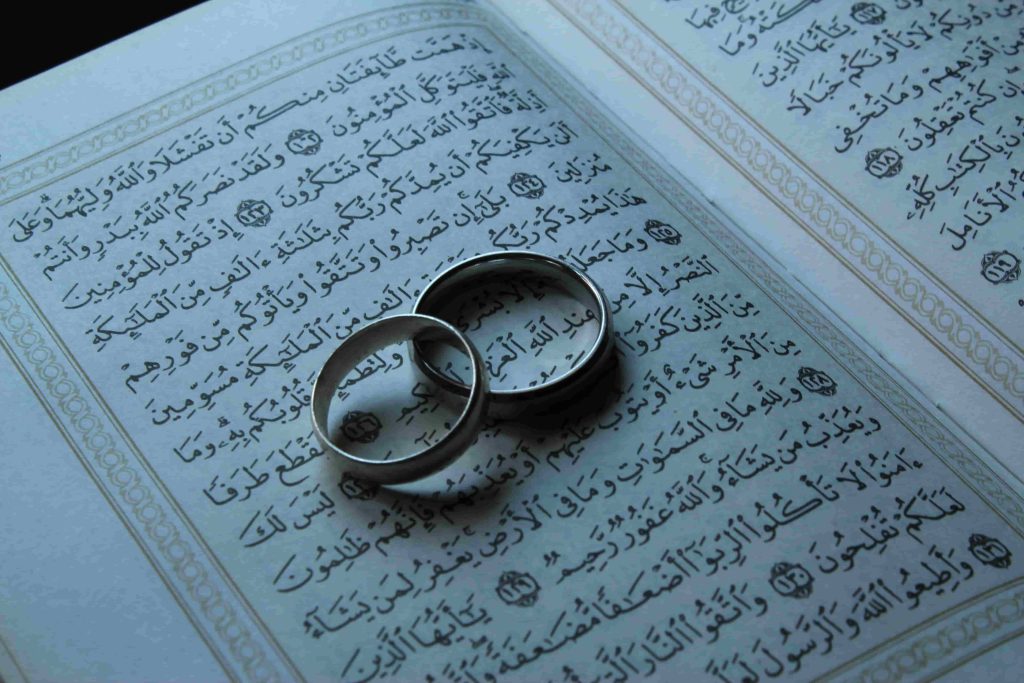
Many men and women have spoken to me about the difficulties they experience in their family lives. One complaint, in particular, recurs with striking frequency: after being married for some years, they no longer feel emotionally connected to their spouses. The affection and excitement that once characterised their relationship seem to have faded, and they begin to feel that they have married the wrong person. Some even entertain the thought of marrying someone else, imagining that a different partner might restore the happiness and emotional fulfilment they believe they have lost.
Although marital difficulties can arise for many reasons and sometimes require serious attention, I believe that, behind much of this dissatisfaction, there lies a deeper problem in the way we have come to understand marriage and organise our lives. We are increasingly living in an age of self-indulgence, in which personal desires, individual preferences and emotional gratification have become the principal measures of happiness. People are so preoccupied with what they wish to receive from life that they give insufficient thought to what they ought to contribute. Their outlook has become profoundly self-centred. They constantly ask themselves: Am I happy? Are my needs being met? Am I receiving enough affection? Am I getting what I want from this relationship? When the answers are not to their satisfaction, they begin to question their marriage rather than examine their own attitudes and responsibilities.
This is a deeply problematic way of approaching family life. Marriage is not simply a personal arrangement between two individuals who come together to enjoy each other’s company and fulfil their emotional and physical desires. It is, above all, a social institution, a moral commitment and the foundation of family life. Through marriage, two individuals undertake the responsibility of establishing a home, nurturing children, cultivating good character and contributing to the moral well-being of society. Marriage, therefore, is not merely about two people living together; it is about two people building something greater than themselves.
This requires a fundamental shift in our thinking. Instead of asking, ‘What am I getting out of this marriage?’, we should ask, ‘What am I building through this marriage?’ The first question reflects a consumer mentality, whereas the second reflects a sense of responsibility. Those who approach marriage as consumers constantly assess whether their relationship is meeting their expectations. They measure its worth by the degree of satisfaction it offers them. But those who approach marriage as a moral responsibility understand that family life is a continuous process of giving, nurturing, sacrificing and building. They recognise that a successful marriage is not simply one in which their desires are fulfilled, but one in which a family is nurtured and a meaningful life is established.
The Islamic understanding of marriage places great emphasis on this sense of responsibility. The Qur’anic concept of qiwāmah (قوامة), expressed in the description of men as qawwāmūn (قوّامون), highlights the responsibility entrusted to men for the care and welfare of their families. This should not be understood merely in terms of authority or position, but fundamentally as an obligation of service, protection and care. A husband must take responsibility for the well-being of his wife and children. He should strive to make them happy, provide them with security and create an environment in which they can grow into better human beings. His responsibility is not simply to maintain a household materially, but to contribute to the emotional, intellectual, moral and spiritual development of those entrusted to his care.
Such a responsibility, however, cannot be discharged through self-indulgence. It demands self-discipline. A man cannot fulfil his obligations as a husband and father if he remains absorbed in his own pleasures, desires and personal ambitions. Nor can a woman contribute fully to the well-being of her family if she regards her individual gratification as the sole measure of a successful marriage. Both husband and wife must learn to exercise restraint, moderate their expectations and, at times, place the needs of their family above their immediate preferences. This is not a denial of their individuality or happiness; it is an expression of maturity and moral responsibility.
One of the great misconceptions of our age is that love consists in the continuous fulfilment of desire. People expect marriage to provide uninterrupted excitement, constant emotional stimulation and an enduring sense of personal gratification. Yet no human relationship can sustain such expectations. Every marriage passes through periods of difficulty, emotional distance, disagreement and disappointment. The arrival of children brings new responsibilities; financial pressures, professional commitments and the demands of everyday life consume time and energy. There will inevitably be moments when the romance of the early years gives way to the routine and responsibilities of family life. This does not necessarily indicate that love has disappeared or that the marriage has failed. It is often simply the reality of building a family.
The real test of marriage, therefore, is not whether it fulfils our desires at every moment, but whether we possess the maturity to remain committed to our responsibilities when those desires are not immediately satisfied. A lasting marriage is not sustained by excitement alone. It is sustained by loyalty, patience, mutual consideration, forgiveness and a shared commitment to a common purpose. Indeed, affection often acquires greater depth as two people navigate life’s difficulties together. The excitement of the early years may diminish, but it can be replaced by something far more enduring: trust, companionship, respect and a profound sense of belonging.
We must also recognise the close relationship between family life and ibādah (worship). Raising a family with sincerity, patience and discipline is itself an act of worship when undertaken with the right intention and in accordance with the guidance of Islam. Caring for one’s spouse, providing for one’s children, educating them, cultivating their character and helping them become righteous and responsible individuals are not merely mundane domestic activities. They are significant religious and moral responsibilities for which Allah has promised great reward.
We should therefore abandon the idea that family responsibilities are somehow separate from, or secondary to, our religious lives. They are an integral part of them. A father who works honestly to provide for his family, a mother who patiently nurtures her children, and a husband and wife who support one another through life’s difficulties are all engaged in meaningful acts of devotion. A home can become a place of worship in the broadest sense: a place where faith is practised, virtues are cultivated, good character is developed and the values of Islam are transmitted from one generation to the next.
Here, however, we must appreciate the fundamental tension between worship and the unrestrained pursuit of desire. Ibādah requires discipline, patience, restraint and commitment. Uncontrolled desire, by contrast, encourages immediate gratification, impatience and self-centredness. The two represent fundamentally different orientations towards life. A person cannot build a life of meaningful worship whilst allowing every passing desire to dictate his or her decisions. If individuals consistently choose personal gratification over their family responsibilities, the consequences are bound to be destructive. Neglect gradually replaces care, resentment replaces affection, and the trust upon which family life depends begins to erode. A family cannot flourish when its members are primarily concerned with themselves.
We must remember, too, that raising a family involves far more than providing food, shelter and material comfort. It entails the much greater responsibility of raising good human beings. Children need affection, attention, moral guidance, sound education and, above all, a stable and nurturing home. They learn not merely from what their parents tell them, but from what they observe in their everyday lives. They see how their father treats their mother, how their mother responds to difficulties, how disagreements are resolved and how responsibilities are discharged. The home is the first school of human character, and parents are its most influential teachers. If they are perpetually absorbed in their own desires, they may deprive their children of the emotional security and moral guidance essential to their development.
Raising a family should, therefore, be regarded as one of the greatest virtues and most consequential responsibilities of human life. It demands patience when we are exhausted, generosity when we would rather keep things for ourselves, forgiveness when we feel hurt and perseverance when circumstances become difficult. These virtues do not emerge from the pursuit of personal pleasure; they are cultivated through the discipline of responsibility. Family life offers one of the most profound opportunities for overcoming selfishness and developing the qualities of character that bring us closer to Allah.
There is, moreover, an immense reward attached to this undertaking. The efforts we make to establish a righteous family, raise responsible children and create a home founded upon faith, compassion and mutual respect are never wasted. The goodness we cultivate in our homes and the values we instil in our children may continue to benefit us long after we have departed from this world. Children who grow up to remember Allah, serve humanity and carry forward the principles of righteousness become a lasting source of goodness for their parents. What greater investment could there be than to nurture a generation of people who embody faith, integrity and compassion?
This commitment also brings a profound sense of satisfaction in this world. There is a particular kind of happiness that comes from seeing one’s children develop into good human beings, witnessing one’s spouse flourish, overcoming life’s difficulties together and knowing that one has discharged one’s responsibilities with sincerity. Such satisfaction is deeper and more enduring than the fleeting pleasure of gratifying individual desires. It is the contentment of having built something meaningful, rather than merely having experienced something pleasurable.
The essential point, then, is that marriage should bring about a fundamental reorientation of our lives. Once we marry, the centre of our lives must no longer be our individual selves; it must increasingly become the family we have undertaken to build. This does not mean abandoning personal development, legitimate interests or individual happiness, nor does it diminish our primary obligations to Allah. Rather, alongside our acts of worship and other religious duties, the family must become a central focus of our time, energy and moral commitment. We must learn to organise our lives around the well-being and development of our families, rather than expecting our families to accommodate the endless demands of our individual desires.
A married person must move beyond the narrow question, ‘What do I want from life?’ and embrace the more profound questions: ‘What kind of family am I striving to build? What kind of human beings am I helping to raise? What legacy of goodness will I leave behind?’ This transformation in perspective can fundamentally change the way we understand marriage, emotional dissatisfaction and the responsibilities of parenthood.
Ultimately, a successful marriage is not simply about finding the right person; it is also about becoming the right person. Instead of constantly looking elsewhere in the hope of finding greater satisfaction, we should first examine whether we are bringing patience, commitment, generosity and self-discipline into our existing relationships. A new marriage cannot, by itself, resolve the problems created by an undisciplined and self-centred approach to life. Unless our attitude changes, the same dissatisfaction may follow us into another relationship.
Marriage is not merely about finding someone with whom to enjoy life; it is about accepting responsibility for building a life together. Its true significance lies not only in the affection between husband and wife, but also in the home they establish, the children they nurture, the character they cultivate and the contribution they make to society. When we understand family life as a trust from Allah rather than an opportunity for the fulfilment of our personal desires, marriage acquires a far deeper meaning. It becomes a journey of self-discipline, moral development and worship: a journey that brings fulfilment in this world and, by the grace of Allah, immense reward in the Hereafter.