Turkey Journey Conference Summary
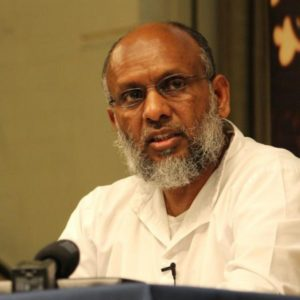

I descended to the conference hall and found gathered there a select company of ‘ulamāʾ and researchers: at their head Shaykh Ṣuhayb Ḥasan, Shaykh Muṣṭafā Dādāsh, Shaykh Akram Kilish, Shaykh Khālid Ḥanafī, Shaykh Amīn al-Ḥazmī, Shaykh Aḥmad Jāb Allāh, Shaykh ʿAbd al-Majīd al-Najjār, Shaykh Murād Sulaymānūf, and other people of learning and merit—may God benefit the ummah through them and cause good to flow by their hands.
The first session convened at precisely nine o’clock in the morning. The Supreme Council for Religious Affairs presented a chart that sets out the beginnings of the lunar months across fifty years, an attempt to look ahead to operating fully by the Hijrī calendar and to explore the possibility of unifying the starts of the months on a shared scientific and methodological basis.
Discussion ensued on the criteria and foundations upon which a single calendar might be applied. In this context the efforts of the International Conference for the Unification of the Hijrī Calendar, held in Istanbul in 2016, were recalled; among its foremost aims was to establish a unified calendrical system that could be adopted throughout the Muslim world, reducing differences of sighting and divergence in the onset of months, thereby drawing Muslims closer together in their rituals and seasons of worship.
In its second morning sitting the Council moved to a theme no less important: “Methodological Parameters for Ijtihād in Emerging Issues”. The need for this topic is acute in the Muslim reality of Europe, where new nawāzil continually arise, where sharʿī considerations intersect with social and legal circumstances, and where sound ijtihād becomes an indispensable necessity.
The first paper, by Shaykh Khālid Ḥanafī, bore the title “Methodological Parameters for Ijtihād in Emerging Issues”. He affirmed that ijtihād in the nawāzil of Muslims cannot be sound except by an integrated system of methodological guidelines that combine rigorous examination of the revealed texts and sharʿī principles with full awareness of the European context and its specificities, together with consideration of the consequences that follow from a fatwā. A fatwā, he reminded us, is not a fleeting reply to a passing question; rather, it is an instrument for building a stable Islamic presence, guiding the lives of Muslims, and realising equilibrium between immutable sharʿī norms and the demands of a changing reality. Among the guidelines he stressed were the necessity of liberation from sectarian partisanship and the disciplined choice, across the madhāhib, of the view supported by evidence and a recognised maṣlaḥah, not by whim or unrestrained leniency.
Our esteemed Shaykh Aḥmad Jāb Allāh then presented his paper entitled “Contemporary Fiqh Issues for Muslims in Europe in the Light of the Principle: Judgement upon a Matter Follows from its Conception”. He treated the nature of these new fiqh questions and the optimal methodology for addressing them in fatwā, highlighting that the soundness of a sharʿī ruling depends upon the soundness of one’s conception of the issue: grasping its circumstances and particulars, then giving it a precise fiqh characterisation that enables the appropriate ruling to be applied. How many errors in fatwā, he observed, originate in a defective conception of the case or neglect of aspects upon which the ruling depends!
Thereafter our teacher, the virtuous Dr ʿAlī Muḥyī al-Dīn al-Qaraḍāghī, delivered a study entitled “The Ruling on Jesting in Contracts and its Effect on Marriage and Divorce Contracts”. Dr al-Qaraḍāghī dealt with the topic at length, discussing its facets in detail, excelling in exposition and benefit, and revealing the subtleties of this fiqh issue and the consequences it carries in transactions and family relations, especially when the words uttered by a person impact the destiny of homes and the stability of families.
Two further topics were then tabled, both connected to the rapid technological advance that raises new questions in the arena of fatwā. The first, by Ṭāhir Mahdī, was “Ethics of Artificial Intelligence and Legal Responsibility in Digital Fatwā”; the second, by Fāyiz al-Nūbī, “Artificial Intelligence and the Extent of its Usefulness in Fatwā”. These subjects lie at the heart of contemporary transformations which oblige scholars to master the tools of the age while holding fast to the parameters of ijtihād and the trust of the fatwā, so that benefit from technology becomes a means of serving the sacred knowledge, not an opening to undermine the responsibility of the muftī or weaken confidence in the fatwā.
In the afternoon sitting the discussion moved to a number of medical issues and personal-status matters—among the most delicate chapters of contemporary fiqh, for they require uniting sharʿī knowledge with medical expertise and taking into account what is newly arising in laws, customs and factual realities.
Foremost among the papers in this axis was that of Shaykh Jāsir ʿAwdah, “Sharʿī Parameters in Organ Transplantation and Their Effect on the Prohibition of Heart Transplant on the Basis of Brain Death”. He addressed the question of brain death and the medical and sharʿī problems it stirs, probing the determination of death’s reality and the guidelines for ruling upon it, while underscoring the scientific centrality of the heart. This is an issue requiring further specialised research, for the establishment of death carries rulings that touch upon human sanctity, the disposition of organs, and the rights of the deceased and their kin.
Shaykh Khālid Ḥanafī then presented his study, “The Transfer and Transplantation of Organs and the Application of their Rulings to the European Context under New Laws”. He treated brain death from a fiqh perspective, referring to the decisions issued concerning it by fiqh academies and bodies—including the European Council for Fatwā and Research—and to what the application of rulings within Europe requires of familiarity with current laws and observance of the related medical and sharʿī parameters.
This was followed by a paper from our sister Shaykha Ḥafīzah Rabīʿ, “The Effect of Governmental Social Assistance on the Maintenance Owed to the Wife”. Here the need is manifest for exact fiqh examination of the interaction between family obligations and systems of social welfare, and the questions that may arise about maintenance, the wife’s rights, and the impact of state benefits on assessing financial responsibilities within the family.
Shaykh ʿAbd al-Majīd al-Najjār likewise delivered a study entitled “The Principle: Leniencies Permitted in Continuation Are not Permitted at Inception, with Some of Its Applications in Family Law in the West: Arbitration before Divorce and Khulʿ”. He treated a fiqh principle that bears upon addressing certain conditions of the Muslim family in Western societies, especially with respect to procedures of arbitration and reconciliation before divorce or khulʿ, and what these matters require of considering the difference between initiating situations and maintaining them once established, all in the light of sharʿī parameters and the purposes of family reform.
Thus the sessions of the day passed: from the regulation of lunar months, to methodologies of ijtihād in nawāzil, to rulings of contracts and family, to issues of modern medicine, to the horizons of artificial intelligence in fatwā. These topics, diverse in appearance, are in truth united by a single question: how can fiqh remain faithful to its roots, clear-sighted about its reality, and capable of absorbing new developments—without rigidity that disables its function, and without laxity that severs it from its foundations and objectives?
The final session was convened to discuss administrative affairs, thereby concluding the day’s labours after hours of scholarly deliberations and juridical dialogues. These revealed the breadth of the fields of contemporary ijtihād and the continual need for the co-operation of scholars, the exchange of expertise, and the unification of vision where possible, while keeping the door of reflection and ijtihād open in matters that admit further inquiry and invite deeper contemplation.
Perhaps the most beautiful fruit one leaves such gatherings with is the understanding that fiqh is not a science imprisoned within books, nor rulings extracted from texts in isolation from people’s lives. Rather, it is a discipline that combines the authenticity of evidence, the precision of understanding, the beauty of reflecting on reality, and the foresight of envisaging outcomes. Through this balance scholars are able to fulfil their mission of guiding people, safeguarding their interests, and building a stable Islamic life in societies where transformations accelerate and questions continually renew themselves.
We ask God to bless the efforts of the scholars and researchers, to make their works solely for His noble countenance, to benefit the Muslims through them, to grant them success in what rectifies religion and world, and to unite the word of the ummah upon truth, goodness and right guidance.